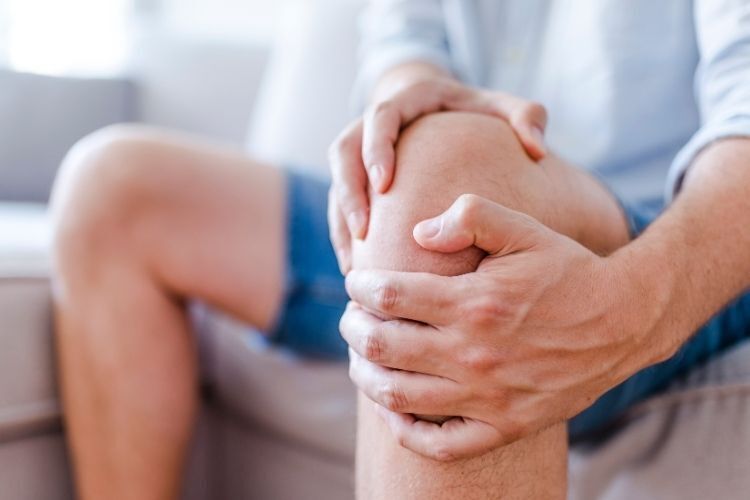
Knee bursitis tends to creep up quietly. Maybe you spent a weekend kneeling to lay flooring, or you took a hard knock on the pavement, and a few days later the front of your knee looks puffy and hurts on the stairs. That swelling has a name, and it usually responds well to the right care. This guide explains how knee bursitis develops, which signs matter, and how a physiotherapist can help you get back to normal movement.
What Is Knee Bursitis?
Bursae are small, fluid-filled sacs that cushion the spaces between bone, tendon, and skin. Your knee has several of them. When one becomes irritated, it fills with extra fluid and swells, and that is bursitis. People who kneel for work, runners, and those with arthritis in the joint are most likely to develop it.
Types of Knee Bursitis
The location of the swelling tells you which bursa is involved:
- Prepatellar: swelling directly over the kneecap, often called housemaid's knee.
- Infrapatellar: swelling just below the kneecap, near the patellar tendon.
- Pes anserine: pain on the inner knee, a few centimetres below the joint line.
- Suprapatellar: swelling above the kneecap, often linked to an irritated joint.
Each type loads the knee a little differently, so treatment is never one-size-fits-all.
Knee Bursitis Symptoms to Watch For
Common symptoms include soft, squishy swelling, warmth, tenderness when pressed, and pain with kneeling, squatting, or climbing stairs. Stiffness after sitting is also typical. Knee bursitis often looks worse than it feels at first, which is why many people wait too long to get it checked.
The pattern helps separate bursitis from other problems. Bursitis is usually tender and swollen in one defined spot. A meniscus problem is more likely to cause catching, locking, or a sense of the knee giving way. A hands-on assessment sorts this out quickly.
When Bursitis in the Knee Needs Urgent Care
Sometimes a bursa becomes infected. Septic bursitis in the knee brings fever, hot red skin, fast-growing swelling, or a cut over the sore area. Get medical care the same day if you notice these signs, because infection needs antibiotics and sometimes drainage, and the NHS also treats this as a medical issue.
What Causes Bursitis in the Knee?
Most cases trace back to one of four sources:
- Repetitive pressure: kneeling on hard surfaces, common for tilers, gardeners, and cleaners.
- Direct impact: a fall onto the knee or a knock during sport.
- Overuse and mechanics: a sudden jump in running volume, weak hips, or tight hamstrings.
- Medical conditions: osteoarthritis, gout, and rheumatoid arthritis all raise the risk.
Mechanics deserve a closer look. Swelling can settle with rest alone, but if weak hips or poor movement patterns keep overloading the same spot, the problem returns.
Bursitis Knee Treatment: What Actually Helps
Most people recover without surgery. Care happens in two stages: calm the irritation first, then fix what caused it.
Early Self-Care and a Knee Brace for Bursitis
For the first few days, protect the knee from the pressure that started it. Avoid kneeling, ice the area for 10 to 15 minutes at a time, and keep the leg elevated when you can. A soft pad helps if kneeling is unavoidable. Some people find a compression sleeve or brace eases swelling and friction, though it will not fix the underlying cause.
Knee Bursitis Exercises to Rebuild Strength
Once pain settles, gentle movement helps. Early options include heel slides, thigh squeezes, and straight-leg raises. As comfort improves, add glute bridges, side-lying hip raises, step-ups, and sit-to-stand practice. Tight hamstrings and calves are worth stretching, especially with pes anserine pain.
Exercises to avoid at first are deep squats, lunges on hard floors, and anything that presses directly on the kneecap. If swelling is bigger the next morning, the load was too much.
Is Walking Good for Knee Bursitis?
Usually yes, in small doses. Short, flat walks keep the joint moving without much pressure on the front of the knee. Hills, stairs, and long distances can flare inner-knee symptoms, so build up gradually and let next-day soreness guide you.
When Bursitis Knee Treatment Needs a Doctor
If swelling stays large or pain keeps climbing despite a few weeks of sensible care, see your family doctor. A physician can drain excess fluid, offer a corticosteroid injection, or prescribe antibiotics for an infected bursa. Surgery to remove a bursa is uncommon and reserved for stubborn, long-standing cases. Physiotherapy then picks up the rehab afterward so the problem does not return.
How to Prevent Bursitis in the Knee
Picture a flooring installer who spends six hours a day on hard subfloors. Thick knee pads, regular standing breaks, and switching between kneeling and squatting positions take pressure off the front of the knee. Runners can protect the inner knee by raising weekly distance gradually and keeping the hips strong. These small habits matter more than any brace.
Knee Pain Physio Treatment at Integra Physio in Surrey
A good physiotherapist treats the sore bursa and the habits behind it. At Integra Physio in Cloverdale, assessment covers where the swelling sits, how you load the knee at work and in sport, and how your hips, ankles, and back move. Lead physiotherapist Tim Muller has more than 22 years of experience, trained in the Netherlands, and approaches every case by working out what is driving the pain. Most people leave the first visit with a diagnosis, a short home exercise list, and clear guidance on which activities to keep.
Treatment may include manual therapy, taping, dry needling where suitable, and graded strengthening. Patients who want supervised progression can move into our physio-led active rehabilitation, and athletes can build a return plan through sports injury rehab in Cloverdale.
Looking for a physio Surrey residents trust for stubborn knee problems? You do not need a referral to book in British Columbia, and many extended health plans cover physiotherapy. We also treat patients at our Ladysmith location.
Frequently Asked Questions About Knee Bursitis
How long does knee bursitis last?
Mild cases often settle within a few weeks once the aggravating pressure stops. Long-standing or repeatedly irritated cases can take a few months.
Can bursitis in the knee go away on its own?
Often, yes, if you remove the trigger. If you keep kneeling or overloading the joint, it tends to linger or return.
Should I rest or move with bursitis of the knee?
Both. Rest from the trigger, but keep gentle movement going. Complete immobilization weakens the leg and slows recovery.
Do I need an MRI or X-ray?
Usually not, since diagnosis is mostly based on examination. Imaging comes into play if the cause is unclear, progress stalls, or a fracture or infection is suspected.
Is bursitis the same as arthritis in the knee?
No. Bursitis is irritation of a fluid sac, while arthritis involves the joint surfaces. They can occur together, and arthritis raises the risk of bursitis.
Get Help for Knee Bursitis in Surrey and Cloverdale
If swelling or pain in your knee has lingered beyond a week or two, book an assessment for physiotherapy in Cloverdale at Integra Physio. Early care shortens recovery, so there is little benefit in waiting.

.jpg)
.jpg)
